AFCA CHAPTER: Cameroon
About Cameroon
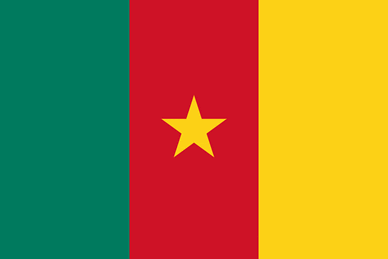
Cameroon, located on the Gulf of Guinea, is renowned for its diverse terrain and rich wildlife. Its capital, Yaoundé, and largest city, Douala, serve as gateways to ecotourism sites and beach resorts like Kribi and Limbe. The name “Cameroon” originates from “Rio dos Camarões” (River of Prawns), named by Portuguese explorers in the 15th and 16th centuries. The Germans later extended this term to their entire protectorate, now modern-day Cameroon.
Cameroon’s high altitude, volcanic soils, and ample rainfall contribute to its high-quality coffee, known for its full-bodied flavor with chocolate notes. Coffee production is vital to the economy, with Robusta prevalent in coastal areas and Arabica in the western highlands.
Coffee farming began in 1884 during the German colonial era, expanding significantly by 1928. Peak production in 1990 saw record exports of 156,000 metric tons, ranking Cameroon 12th globally. Despite later declines, the government has invested significantly to revitalize the industry.
Coffee is grown in seven regions: West, Northwest, Littoral, Southwest, South, Centre, and East. Arabica plantations are in Bamileke and Bamaoun, while Robusta is more widespread. The Ministries of Agriculture and Rural Development (MINADER) and Scientific Research and Innovations (MINRESI) oversee production.
Only 5% of national coffee production is processed locally. The National Cocoa and Coffee Board (NCCB) regulates coffee marketing and trade under the Ministry of Trade (MINCOMMERCE). In summary, Cameroon’s favorable climate and rich soils produce high-quality coffee, with ongoing efforts to enhance production and processing capabilities.
AFCA Chapter
Mr. Bertrand Gako, Cameroon Chapter Chair
Managing Director, BRÛLERIE DU MOUNGO sarl
Nkongsamba, Cameroon